When grocery businesses decide to sell online, they usually face a choice: commission a custom-built platform, or subscribe to a ready-made one. For most independent stores and growing chains, a multi-tenant SaaS platform is the faster, safer and more affordable route.
What does multi-tenant mean?
In a multi-tenant platform, many businesses run on the same underlying software, but each one gets its own separate store. Your products, customers, orders and branding are yours alone. You simply share the engine that powers everything — and the cost of maintaining it.
The problem with custom builds
A custom platform can look attractive because it is built exactly to your wishes. In practice, it comes with costs that are easy to underestimate:
- Months of development before you take a single order
- Ongoing bills for hosting, security updates and bug fixes
- New features that only arrive when you pay for them
- Dependence on the developers who built it
Why SaaS works better for grocery
You launch in days, not months
The storefront, admin panel, checkout and delivery tools already exist. You configure them instead of building them.
Improvements reach everyone
When the platform gets a new feature or a security fix, every store receives it automatically, at no extra cost.
It scales with you
Whether you have one shop or several branches, the same platform grows with your order volume. Chains can run separate branded storefronts while staying in control from one admin panel.
A platform shared by many businesses can afford to be better than one any single business could build alone.
What to look for in a platform
- Your own brand and domain, not a marketplace listing
- A mobile app for customers and a delivery app for drivers
- Clear, predictable pricing with no hidden fees
- Real reporting, so you can see what is working
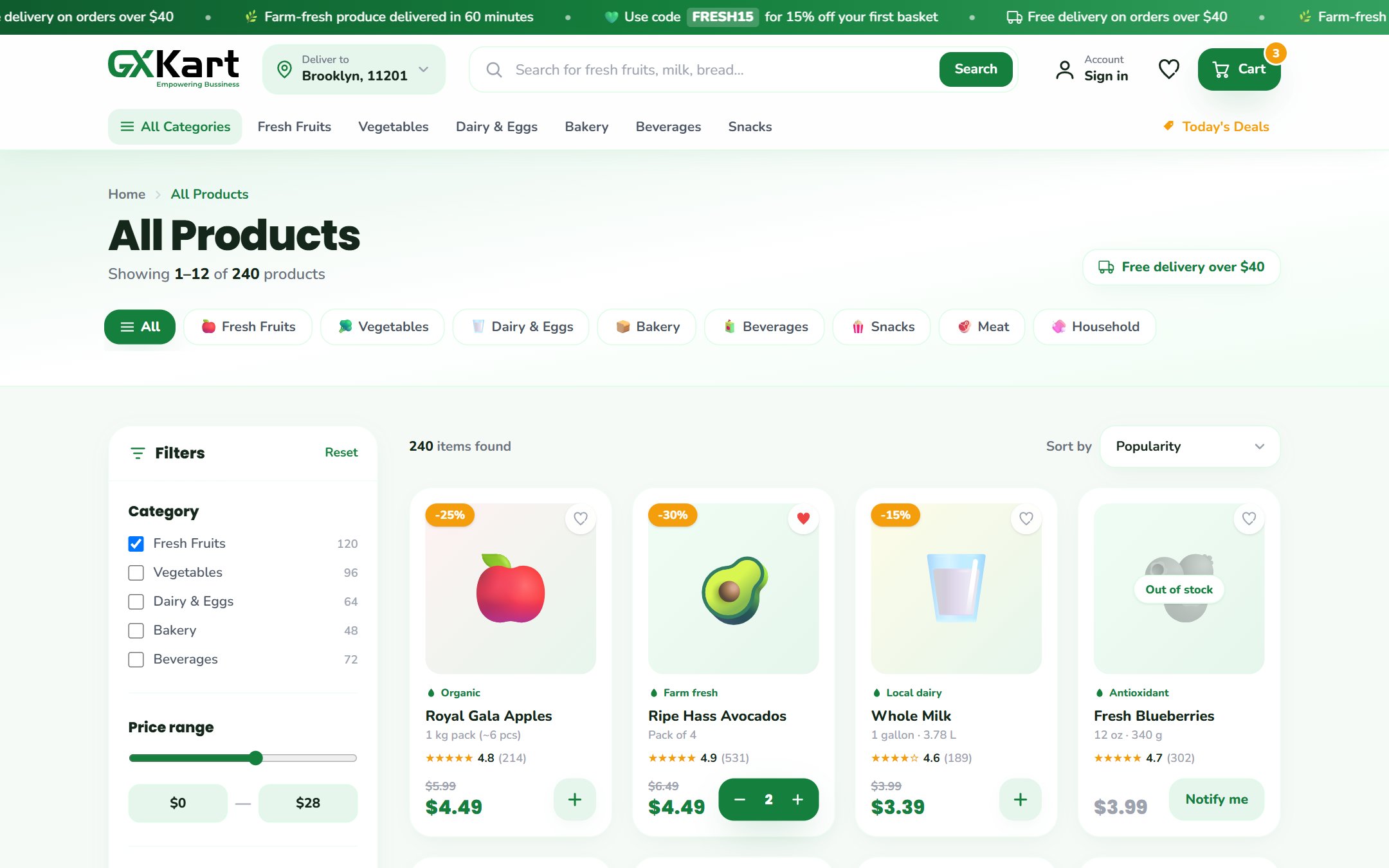
GXKart was built around exactly these needs, so grocery businesses can spend their time on customers and products — not on software.