Quick answer: To start an online grocery delivery business, choose your model (store-based, dark store or partner delivery), map a tight delivery zone, set up drivers and a delivery app, launch your own branded ordering app, and price delivery by distance so every order stays profitable. Start in one zone, prove you have enough orders there, then expand.
+29%
growth in US grocery delivery sales in one year (June 2025)
$3.8B
US grocery delivery sales in a single month
38%+
of US online grocery sales came from delivery in June 2025
<1 hr
delivery promised by the giants, “eroding” quick store trips
Delivery is the fastest-moving part of online grocery. In June 2025, US grocery delivery sales hit $3.8 billion in one month, up 29% on the year before. Brick Meets Click said delivery is now “effectively free” for many shoppers through membership programs. That sets a high bar. To compete, a local grocer needs a delivery operation that is fast, reliable and still profitable. This guide shows how to build one.
In this guide
- Step 1: Pick your delivery model
- Step 2: Map a tight delivery zone
- Step 3: Decide your promise: scheduled or instant
- Step 4: Set up your drivers
- Step 5: Give your drivers a proper delivery app
- Step 6: Launch your ordering app and website
- Step 7: Price delivery so every order makes money
- Step 8: Launch in one zone, then expand
- Key numbers to watch
- FAQ
Step 1: Pick your delivery model
| Model | How it works | Start-up cost | Best for |
|---|---|---|---|
| Store-based | Staff pick orders from your shop shelves | Low | Existing grocers |
| Dark store | A closed stockroom that only serves online orders | Medium to high | Dense cities, fast delivery promises |
| Partner delivery | You sell and deliver for local shops | Low stock cost, more coordination | Operators with no stock of their own |
More detail in Online Grocery Business Models Explained.
Step 2: Map a tight delivery zone
Delivery cost falls as orders get closer together. Ten orders in one suburb cost far less to deliver than ten orders spread across a city. Start with a zone you can reach in under an hour, usually 5–10 km in a city. Set zones by postcode or distance, and charge more or set a higher minimum order for outer zones.
Step 3: Decide your promise: scheduled or instant
| Option | How it works | Cost to run | Best for |
|---|---|---|---|
| Scheduled slots | Shopper picks a window, e.g. 4–6 pm | Lower: you batch orders and plan routes | Weekly family shops |
| Instant | Delivered as soon as possible, often under 60 minutes | Higher: more drivers, less batching | Top-ups, snacks, forgotten items |
Most independent grocers start with scheduled slots and add instant delivery for a higher fee. GXKart supports both instant and scheduled orders, so you can offer both from day one.
Step 4: Set up your drivers
- Your own drivers: most control over freshness, timing and service.
- Local couriers: flexible, you pay per drop.
- A mix: your own drivers for busy hours, couriers for overflow.
Keep chilled and frozen items in insulated bags, pack them last, and check your local rules for transporting food.
Step 5: Give your drivers a proper delivery app
Phone calls and spreadsheets start breaking at around 20 orders a day. A delivery app lets you:
- Assign orders to drivers and see their status live
- Give shoppers real-time tracking
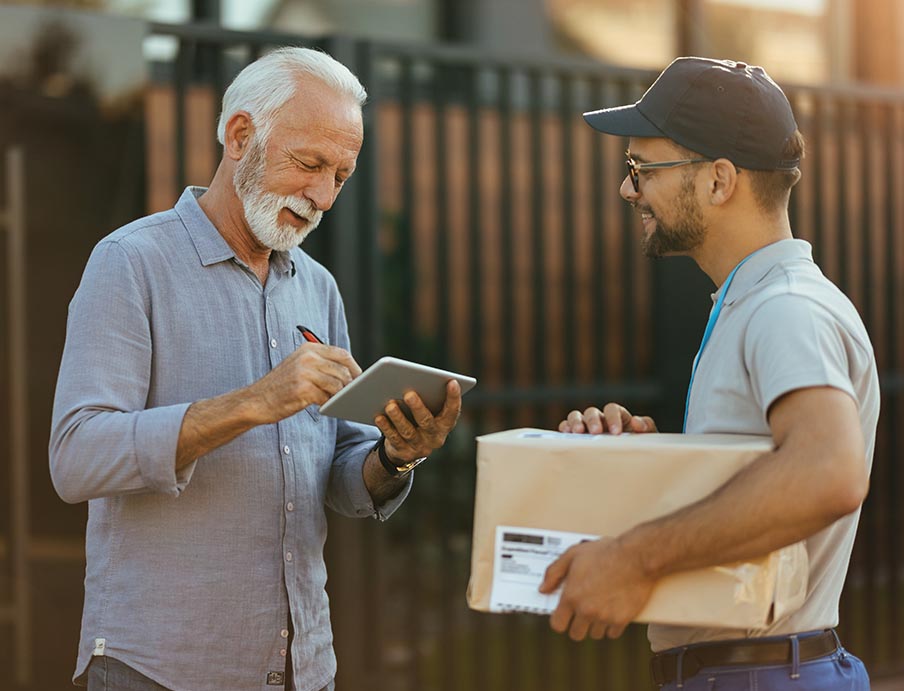
- Confirm every drop with a photo or signature
- Handle cash on delivery where shoppers expect it
GXKart includes a delivery app in your own brand, alongside your customer app and website.
Step 6: Launch your ordering app and website
Shoppers need fast search, one-tap reorders and a clear delivery slot. Your own branded app keeps repeat customers with you and avoids the 15–30% commission marketplaces charge (see the maths). It also takes phone orders: staff can create orders straight from the GXKart admin panel for shoppers who still prefer to call.
Step 7: Price delivery so every order makes money
Delivery pricing is where most new grocery delivery businesses lose money. Use four levers:
| Lever | Example | What it protects |
|---|---|---|
| Minimum order | $40 minimum | Stops small baskets costing you money |
| Fee by distance | $4.99 within 5 km, $7.99 for 5–10 km | Covers longer drives |
| Fee by time | Higher fee for instant or evening slots | Covers peak demand |
| Free delivery threshold | Free over $90 | Pushes basket size up |
Example figures only. GXKart lets you set delivery prices that change by location and by time, so these rules run automatically.
Track your cost per delivery: driver time + fuel + packaging. If it is higher than your delivery fee plus your margin, change the zone or the fee.
Step 8: Launch in one zone, then expand
Launch to one zone and wait for a steady daily order count before adding the next. Use first-order coupons, QR codes in-store, local community groups and your Google Business Profile. More in Grocery Store Marketing Ideas That Grow Sales.
Key numbers to watch
| Number | What good looks like |
|---|---|
| Orders per delivery hour | Rising as routes get tighter |
| Cost per delivery | Below your delivery fee plus margin |
| On-time rate | 95% or better |
| Missing-item or substitution rate | Falling every month |
| 30-day repeat rate | Most first-time shoppers order again |
FAQ
Is a grocery delivery business profitable?
It can be, when orders are close together, baskets are large and you avoid per-order commission. Small baskets spread over a wide area are where money is lost.
Do I need my own vehicles to start?
No. Many start with couriers or drivers using their own vehicles, then add a fleet as orders grow.
How do I start grocery delivery with no store?
Use a dark store stocked by wholesalers, or partner with local shops and deliver for them.
Should I offer instant delivery or time slots?
Start with time slots, which are cheaper to run. Add instant delivery for a higher fee once you have enough drivers.
See the delivery app your drivers would use: book a live GXKart demo.